Thank You So Much: A Unique Handwritten Font for Creative Expression
Thank You So Much is more than just a font—it’s a visual statement. Designed with personality and intention, this handwritten typeface offers a distinctive aesthetic that can elevate any creative project. Whether you're crafting a greeting card, designing a logo, or creating content for digital platforms, Thank You So Much provides a versatile and expressive option that stands out in a crowded design landscape.
Aesthetic Appeal and Design Philosophy
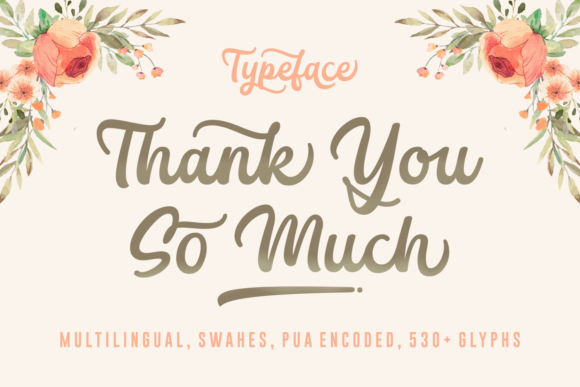
At its core, Thank You So Much is a handwritten font that captures the warmth and sincerity of a handwritten note. The design features flowing lines, subtle variations in stroke weight, and a natural feel that mimics the imperfections of real handwriting. This intentional irregularity gives the font a sense of authenticity and charm that machine-generated fonts often lack.
The font's character set includes a wide range of letters, numbers, and symbols, making it suitable for both short phrases and longer text. Its open shapes and generous spacing contribute to readability, even when used in larger sizes. This balance between style and functionality ensures that Thank You So Much remains legible across various applications.
Strengths and Practical Value
One of the standout qualities of Thank You So Much is its adaptability. It works well in both print and digital formats, offering designers flexibility in how they incorporate it into their projects. Whether used as a headline, body text, or decorative element, the font maintains its visual appeal without compromising clarity.
Another key strength is its emotional resonance. The handcrafted nature of the font evokes a sense of gratitude and appreciation, making it particularly effective for messages of thanks, love, or celebration. This emotional depth adds value beyond mere aesthetics, allowing the font to convey meaning and intent in a way that aligns with its name.
Use Cases and Target Audience
Thank You So Much is ideal for individuals and businesses looking to add a personal touch to their designs. It is especially well-suited for creatives such as graphic designers, illustrators, and content creators who seek to differentiate their work through unique typography.
Professionals in marketing, branding, and education may also find value in using this font to enhance visual communication. For example, educators might use it to create engaging lesson materials, while small business owners could incorporate it into promotional materials or signage.
Freelancers and bloggers may benefit from its versatility in both print and digital contexts, making it a valuable asset for a wide range of creative tasks.
Real-World Performance and Usability
In practical use, Thank You So Much performs well across different platforms and devices. It renders consistently in most modern web browsers and design software, ensuring that the intended visual effect is preserved regardless of the medium.
However, like any handwritten font, it may require some fine-tuning for optimal results. For instance, when used in body text, it is advisable to pair it with a complementary sans-serif or serif font to maintain readability. This approach helps avoid overwhelming the reader while still preserving the font’s signature style.
Quality and Reliability
The quality of Thank You So Much is evident in its attention to detail and craftsmanship. Each letter is carefully designed to reflect the fluidity of handwriting while maintaining a cohesive overall look. This level of care contributes to the font’s reliability and long-term usability.
As a downloadable font, it is typically available in multiple formats such as OTF and TTF, ensuring compatibility with a wide range of design tools and platforms. This accessibility makes it easy for users to integrate into their workflow without encountering technical barriers.
Limitations and Considerations
While Thank You So Much has many strengths, it is not without its limitations. As a handwritten font, it may not be the best choice for formal or professional settings where a more structured appearance is preferred. In such cases, a serif or sans-serif font might be more appropriate.
Additionally, the font’s stylized appearance may not translate well to very small text sizes. When used in tight spaces or at low resolutions, the details of the strokes can become less distinct, potentially affecting readability. Users should consider these factors when deciding on the font’s application.
Who Benefits Most?
Thank You So Much is most beneficial for individuals and businesses that prioritize creativity and personal expression over strict typographic conventions. It is particularly well-suited for those working in fields such as graphic design, branding, illustration, and content creation.
It is also a great fit for niche markets or audiences that appreciate handmade, artisanal, or handcrafted aesthetics. For example, wedding planners, event organizers, and boutique retailers may find the font enhances the visual appeal of their branding materials.
Conclusion and Recommendations
Thank You So Much is a font that brings personality, warmth, and individuality to any design. Its unique style and practical versatility make it a valuable addition to any designer’s toolkit. While it may not be the best fit for every project, it excels in situations where a heartfelt, expressive, and visually engaging typographic solution is needed.
If you are looking for a font that adds character and emotion to your work, Thank You So Much is worth considering. It offers a balance of style and function, making it a strong contender for creative professionals seeking to stand out in a competitive market.