Okuland: A Handwritten Font with Character and Charm
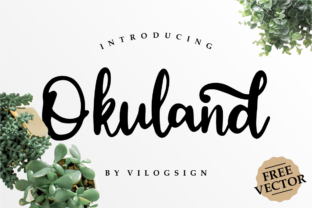
Okuland is a handwritten font that stands out for its whimsical charm and authentic feel. Designed to evoke a sense of warmth and personality, it’s more than just a typographic choice—it's an expressive tool that can enhance the visual appeal of your content. Whether you're crafting a brand identity, designing a website, or creating marketing materials, Okuland offers a unique way to connect with your audience through its handcrafted aesthetic.
The Unique Appeal of Okuland
What sets Okuland apart is its ability to blend creativity with practicality. The font features a playful yet refined style that feels both modern and nostalgic. Each letterform carries a distinct character, making it ideal for projects that require a touch of individuality. Its irregular spacing and subtle variations in stroke weight give it a hand-drawn appearance that feels genuine and unpolished, which many designers find appealing.
This authenticity is one of Okuland’s strongest assets. In a world where digital typography often leans toward uniformity, Okuland offers a refreshing alternative. It's not just about looking good—it's about evoking emotion and storytelling through design. This makes it particularly effective for creative industries such as branding, illustration, and content creation.
Key Characteristics and Design Strengths
Okuland is designed with a clear purpose in mind: to provide a versatile yet expressive typeface. Its structure is balanced, with a consistent baseline that allows for readability even at smaller sizes. The font includes both uppercase and lowercase letters, along with punctuation and special characters, making it suitable for a wide range of applications.
One of the most notable aspects of Okuland is its natural flow. The curves and lines are fluid, giving the text a sense of motion and rhythm. This quality is especially useful when designing logos, invitations, or promotional graphics where visual interest is key. The font also supports multiple languages, expanding its usability across different markets and audiences.
Another strength of Okuland is its adaptability. While it has a distinct personality, it doesn’t overpower the message it conveys. This makes it a great choice for both professional and personal projects. Whether you’re creating a business card, a social media post, or a handmade book, Okuland can be tailored to fit your needs without losing its signature charm.
Practical Use Cases and Target Audience
Okuland is particularly well-suited for professionals who value creativity and personal expression. Marketers and entrepreneurs may use it to create visually engaging brand assets that stand out from the competition. Educators and content creators might find it useful for designing classroom materials, newsletters, or educational resources that feel more approachable and engaging.
Freelancers and small business owners can benefit from Okuland’s versatility. It can be used to craft compelling headlines, call-to-action buttons, or product descriptions that capture attention and convey a friendly, approachable tone. Its whimsical nature also makes it ideal for seasonal campaigns, holiday promotions, or any project that requires a touch of playfulness.
For hobbyists and artists, Okuland offers a new way to explore typography. It can inspire creative experimentation and help bring ideas to life in a more tactile and personal manner. Whether you're working on a personal project or collaborating with others, Okuland provides a foundation for expressing your unique voice through design.
Evaluating Real-World Performance
When evaluating Okuland’s performance in real-world scenarios, several factors come into play. Readability is a critical consideration, especially when using the font in digital formats. While Okuland maintains clarity at larger sizes, it may become less legible at very small sizes due to its organic, hand-drawn style. This means it’s best suited for headings, titles, and other prominent text elements rather than body copy.
Consistency is another important aspect. Because Okuland is a handwritten font, there may be slight variations between letterforms, which some users may perceive as a limitation. However, these variations are part of what make the font feel authentic and human. For projects that require strict consistency, Okuland may not be the ideal choice, but for those that prioritize personality and expressiveness, it excels.
Flexibility is one of Okuland’s greatest strengths. It can be used across various platforms, including websites, print materials, and digital presentations. Its compatibility with most design software ensures that users can easily integrate it into their workflow without encountering technical barriers.
Who Benefits Most from Okuland?
Okuland is best suited for individuals and businesses that prioritize creativity and emotional connection over rigid design conventions. It’s particularly beneficial for those in the creative industries, such as graphic designers, illustrators, and content creators, who are looking for a typeface that enhances the visual narrative of their work.
Entrepreneurs and marketers may find Okuland useful for building a brand identity that feels personal and memorable. Its whimsical nature can help differentiate a brand in a crowded market, especially in sectors like fashion, lifestyle, and entertainment. Educators and publishers might use it to create materials that feel more engaging and accessible to students or readers.
For hobbyists and independent creators, Okuland offers a way to infuse personality into their work without sacrificing quality. It can be used to design greeting cards, art prints, or DIY projects that reflect a unique artistic vision. Its ease of use and affordability make it an excellent choice for those who want to experiment with typography without investing in expensive tools or services.
Limitations and Considerations
While Okuland has many strengths, it’s important to consider its limitations. As mentioned earlier, its hand-drawn style may not be ideal for long-form text or projects that require high levels of consistency. Additionally, because it’s a relatively new font, it may not have the same level of support or customization options as more established typefaces.
Users should also be mindful of how Okuland is paired with other fonts. While it works well as a headline font, it may clash with certain body fonts if not used carefully. It’s recommended to test Okuland in different contexts to ensure it aligns with the overall design goals and user experience.
Final Thoughts and Recommendations
Okuland is a font that deserves attention for its unique blend of charm, creativity, and practicality. It’s not just a typographic tool—it’s an expressive medium that can elevate the visual impact of your work. Whether you're a designer, marketer, educator, or hobbyist, Okuland has the potential to add a distinctive touch to your projects.
If you're looking for a font that balances personality with functionality, Okuland is worth exploring. It may not be the best choice for every situation, but for those who value authenticity and creativity, it offers a compelling alternative to more conventional typefaces. Ultimately, the decision to use Okuland depends on your specific needs, goals, and the kind of message you want to convey through your design.