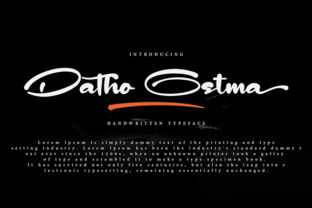
Datho Ostma: A Handwritten Font with Timeless Elegance
Datho Ostma is a unique handwritten font that stands out for its simple yet elegant design. It offers a distinct visual character that can enhance any design project, from branding to creative layouts. This font is not just another option in the crowded world of typography—it’s a carefully crafted choice that brings authenticity and personality to digital and print media.
What Makes Datho Ostma Stand Out?
Datho Ostma is designed with a focus on readability and aesthetic appeal. Its structure is clean and uncluttered, making it suitable for both short text and longer passages. The font maintains a consistent stroke weight and spacing, which contributes to its legibility across different sizes and formats.
One of the key features of Datho Ostma is its handwritten feel. Unlike many other fonts that mimic handwriting through stylized shapes, Datho Ostma captures the essence of a natural script without sacrificing clarity. This makes it ideal for projects that require a personal touch, such as invitations, greeting cards, or promotional materials.
The simplicity of Datho Ostma also means it works well with minimalistic design themes. Whether used in a modern website layout or a vintage poster, the font adapts seamlessly to the surrounding elements. Its versatility allows designers to experiment with different color schemes and backgrounds without compromising the font's integrity.
Comparing Datho Ostma with Similar Options
When considering Datho Ostma, it’s important to understand how it compares to other handwritten fonts. Fonts like Baskerville, Courier New, and Comic Sans MS are often used in similar contexts, but each has its own characteristics.
Baskerville is a serif font known for its classic elegance. While it shares some similarities with Datho Ostma in terms of elegance, it lacks the handwritten quality that makes Datho Ostma unique. Baskerville is more suited for formal documents rather than creative designs.
Courier New is a monospace font commonly used in technical writing. It offers a clean, structured look but does not provide the organic feel that Datho Ostma delivers. For projects requiring a more artistic touch, Courier New may fall short.
Comic Sans MS is another popular font, but it is often criticized for its casual and sometimes unprofessional appearance. While it can be fun and playful, it doesn’t offer the refined elegance that Datho Ostma provides. In professional settings, Comic Sans MS is generally avoided in favor of more polished options.
Datho Ostma bridges the gap between professionalism and creativity. It is neither too formal nor too casual, making it a versatile choice for a wide range of applications.
Strengths and Limitations of Datho Ostma
Like any font, Datho Ostma has its strengths and limitations. One of its greatest strengths is its ability to convey warmth and authenticity. This makes it particularly effective for personal branding, social media content, and marketing materials where a human touch is desired.
Another advantage of Datho Ostma is its adaptability. It performs well in both digital and print formats, ensuring consistency across different platforms. This is especially valuable for businesses that need to maintain a cohesive brand identity across multiple channels.
However, there are situations where Datho Ostma may not be the best choice. For instance, in highly technical or data-driven environments, a more structured font might be preferable. Additionally, when working with very small text sizes, the subtle variations in stroke weight could affect readability.
Despite these limitations, Datho Ostma remains a strong contender for most design needs. Its balance of simplicity and elegance ensures that it can be used effectively in a variety of contexts.
When to Choose Datho Ostma and When to Consider Alternatives
Datho Ostma is an excellent choice for projects that require a personal, handcrafted look. It is particularly well-suited for:
- Branding materials such as logos, packaging, and signage
- Social media content and online campaigns
- Invitations, wedding cards, and event announcements
- Artistic projects and creative layouts
On the other hand, if your project demands a more formal or structured appearance, you might want to consider alternative fonts. For example, Georgia or Arial could be better choices for business reports or academic documents. Similarly, if you're looking for a more decorative style, fonts like Script MT Bold or Lobster might be more appropriate.
The decision ultimately depends on the specific requirements of your project. Datho Ostma excels in scenarios where a warm, authentic feel is needed, but it may not be the best fit for all situations.
Realistic Examples and Practical Comparisons
To illustrate how Datho Ostma can be applied in real-world scenarios, let’s consider a few examples:
Example 1: Branding Materials
A local boutique uses Datho Ostma for its logo and packaging. The font adds a personal touch that aligns with the store’s artisanal theme, making the brand feel more approachable and trustworthy.
Example 2: Social Media Content
A lifestyle influencer incorporates Datho Ostma into their Instagram posts and blog headers. The font enhances the visual appeal of their content while maintaining a friendly and inviting tone.
Example 3: Event Invitations
A wedding planner selects Datho Ostma for the couple’s invitation cards. The font’s elegance and warmth create a sense of occasion that complements the event’s theme.
These examples demonstrate how Datho Ostma can be tailored to meet the needs of different projects. By choosing the right font, designers can significantly impact the overall perception and effectiveness of their work.
Making an Informed Decision
Choosing the right font is a crucial step in any design project. Datho Ostma offers a unique blend of simplicity and elegance that can elevate your work. However, it’s important to evaluate your specific needs before making a decision.
Consider the following factors when deciding whether Datho Ostma is the right choice for you:
- What is the purpose of your design? Is it for branding, marketing, or creative expression?
- Who is your target audience? Does your design need to feel personal, professional, or artistic?
- What are the technical requirements of your project? Will the font be used in print, digital, or both?
- How does the font align with your brand identity? Does it reflect the values and tone of your business?
By carefully evaluating these aspects, you can make a more informed decision about whether Datho Ostma is the best fit for your project.